How will Brexit impact the logistics industry

There have been discussions in the works for months now when it comes to how Brexit will impact the logistics industry. The opinions, so far, have been mixed. Some people think the outcome will be bleak, while others tend to believe that things won’t change much, since freight will still have to enter and leave the UK one way or another.

If those negotiations continue to swing a certain way, one thing can be certain; prices will rise within the logistics industry as tariffs will be applied to consumables and machinery being delivered to the UK.

It can all be a bit overwhelming and confusing, and truly frustrating part is that there are no concrete answers as of yet. So, what will the biggest challenges in the industry be in a logistics Brexit world?

What Challenges Will Brexit Cause the Logistics Industry?

Though we don’t know everything, there are a few expectations when it comes to challenges when it comes to logistics and Brexit that need to be addressed.

First, we need to think about where the UK’s exports are going. Many go to the EU. After Brexit, those exports will go down significantly, which could have a negative impact on trade and a huge decline on demand. Needless to say, it could affect us right away. There won’t be as much demand for road hauling, which can lead to everything from job loss to businesses struggling to stay afloat.

Of course, that isn’t meant to scare anyone. The rate of export may remain unchanged, but companies will need to figure out practical solutions for hauling, depending on what rules are put in place.

What Challenges Will Brexit Cause the Logistics Industry?

Though we don’t know everything, there are a few expectations when it comes to challenges when it comes to logistics and Brexit that need to be addressed.

First, we need to think about where the UK’s exports are going. Many go to the EU. After Brexit, those exports will go down significantly, which could have a negative impact on trade and a huge decline in demand. Needless to say, it could affect us right away. There won’t be as much demand for road hauling, which can lead to everything from job loss to businesses struggling to stay afloat.

Of course, that isn’t meant to scare anyone. The rate of export may remain unchanged, but companies will need to figure out practical solutions for hauling, depending on what rules are put in place.

Barriers and Border Control

Another thing we can likely expect from Brexit is tighter border security that will affect both imports and exports to and from the UK. As you might expect, this can have an impact on delivery times, causing significant delays (link to Should I expect port delays due to Brexit?) and making entire operations feel less efficient.

Migration controls may be another challenge. Many individuals within the EU work for UK-based companies, and that includes road hauling drivers. As a result, we may see fewer drivers since they can’t be recruited from the EU. Again, that can result in delays since a decreased number of drivers will have to take on more work.

Border delays may also be caused by drivers not having the right documentation/permits, or traders not having the right paperwork when they arrive. There will be additional safety checks that many hauliers aren’t used to, so it will take longer just to get through the border, and there is limited space. Simply put, it will likely be a lot of “hurry up and wait”.

What is Flegg Doing?

It has been our consistent goal to make sure that our vehicles and staff can keep working outside of the UK, and we’re confident we will be successful. In fact, we already have several projects lined up outside of the UK for 2021. With that in mind, we plan to consult with clients to talk about the impact of any deals that have been created in the process.

We want to remain as transparent as possible during this time and throughout the transition process. So, we can tell you with confidence that we are not planning to increase our costs for any works within the UK. But, works completed outside the UK are could increase, simply due to more overhead cost. To find out more, read about how Flegg is dealing with Brexit.

Flegg will continue to do what we do best; listen, create, and deliver solutions. While we will be the first to admit that coming up with effective solutions due to Brexit hasn’t been easy, we haven’t changed our goal of providing superior service and coming up with innovative ways to do just that. We are still waiting to see what officially leaving the EU will look like, and what the details of these deals will be. But, we want to be able to provide our customers with confidence that even though logistics may change due to Brexit, we will make the necessary adjustments to keep things running as smoothly as possible.

If you have more questions about logistics and Brexit, call us on 0845 458 4958 or use the contact form for more information.

Should I expect port delays due to Brexit?

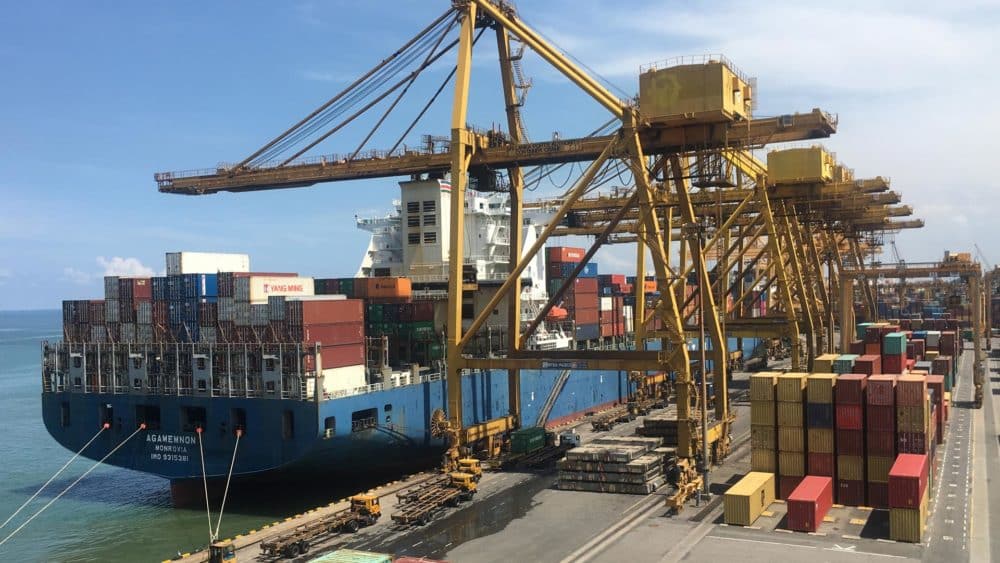
Unfortunately, there are still plenty of unknowns when it comes to exactly how Brexit will affect the shipping industry, especially how ports will be affected. But, the big question most shippers are wondering is if port delays and Brexit will go hand-in-hand.

Let’s talk a bit more about what you can expect when it comes to port delays from Brexit. We understand this feels like an uncertain time, and while we may not have every answer, we can try to ease your worries about what you can expect.

What Delays Can You Expect?

Recently, there has been a huge influx of freight into the UK due to the impending Brexit in January 2021. That includes equipment needed to manage the COVID-19 virus. The delays you can expect are different for road freight and sea freight.

For road freight, expect transportation costs to go up. There is currently a shortage of trailers because of the influx of freight entering the UK. So, haulage firms are trying to take full advantage of the “demand” by raising their prices. That, unfortunately, can cause delays until finances are taken care of.

Sea-freighters can expect pretty major issues with delays as well, especially in light of the COVID-19 pandemic.

Post-Brexit, there are still so many unknowns when it comes to what the procedures will be to enter into the UK. That includes bringing in freight.

What Are the Current Delays?

As of now, the delays for road freight is only about 3-4 days, but sea freight is often delayed anywhere from 1-2 weeks. What’s causing these delays? Currently, it feels quite a bit like a “perfect storm” of things. The biggest culprit is COVID and the demand for equipment and supplies. The pandemic, combined with poor weather conditions and the weight of import freight is making it very difficult to get things in on time.

What Can You Do to Prevent Delays?

Right now, documentation isn’t the main cause of delays. But, if you’re wondering what you can do to prevent delays for your business as much as possible, having the right documents is always important.

Additionally, you must make sure that you educate yourself on the new formalities and stay as up-to-date as possible when it comes to the regulations associated with Brexit. Complete all of the required procedures now so you won’t have to experience any “down time” and delays once things change.

Delays can ultimately cost your business money. Having drivers held up, or losing money on offloading equipment that isn’t being used can be incredibly frustrating, so it’s important to stay on top of delays and schedules as much as you can.

What is Flegg Doing to Minimise Port Delays?

At Flegg, we are urging all of our clients to complete every required procedure as soon as possible to avoid delays. But, we’re taking things a step further by working with our vast network of haulers and forwarders with years of industry knowledge. We’re making sure we are completing every action necessary to operate hauling vehicles outside of the UK.

With delays happening in ports all over the UK, Flegg is trying to stay on top of what comes next, even though it’s a difficult thing to predict. That includes having a concrete idea of accounting for the cost of importing and exporting from the EU, as well as whether customers will need to pay duty on entry. While it’s frustrating not to have answers already, it depends on the Brexit deal details.

One of the only things we can tell our clients for sure is that we have seen many businesses importing stock prior to the deadline. Other than that, we haven’t been able to get much information yet as to what the Brexit deal will look like. But, our drivers will continue to operate outside of the UK and offer the same bespoke solutions we always have. We have prided ourselves for years on our ability to adapt and have a “can do” attitude. Port delays due to Brexit won’t change that.

How Will Brexit Change Things?

Everyone has their own opinion about Brexit. But, without getting into the political side of things, we can say that the one thing industry leaders agree on is an increase in costs when it comes to freight, including machine transport.

At Flegg, we have (and will continue) to do all we can to be as transparent as possible with our customers, and make and we’re excited to already have a few projects in the works outside of the UK for 2021. As of now, we don’t expect to increase our prices, but that, too, is something that depends on any changes in overhead costs due to Brexit. Find out more about how Flegg is dealing with Brexit.

Though it might seem like things are up in the air right now, we will continue to listen, create, and deliver solutions to all of our clients. If you have more questions or want to know more about what we can do for you, call us on 0845 458 4958 or use the contact form for more information.

How Is Flegg dealing with the uncertainty of Brexit?

Preparing for Brexit

The last few years have been challenging for businesses and organisations that import, export and sell to customers abroad. The convoluted processes and ongoing discussions have created a degree of uncertainty, and even now, months into negotiations, it is not clear what will happen when the transition period is over. At Flegg, we have made it our mission to prioritise preparing for Brexit, and we have taken several steps to ensure that we will be able to provide the best possible service for our clients during the transition phase and the period that follows.

The discussions related to trade deals and agreements with the European Union have contributed to issues, which we have tried our best to adapt to and work with to continue operating the best possible service. There has been an influx of traffic at ports to try and beat the deadline, but we have a can-do attitude, and we have made arrangements to ensure as smooth and seamless a transition as possible. We have always endeavoured to provide flexible, tailored services for our clients, and our drivers and fleet will continue to operate outside of the UK once the Brexit transition stage is complete.

How we are dealing with the uncertainty of Brexit

At the moment, with talks ongoing and a lack of certainty about what is going to happen in the weeks to come, we are confident that we have done all we can to prepare for Brexit and ensure that every box has been ticked. We have worked through the Brexit checklists related to importing and exporting to and from the EU provided by the Government and we are ready to help new and existing customers with their lifting and logistics requirements.

We understand that our clients may have questions about what will happen in the coming weeks with regards to time-frames, delays and prices. Our priority is preparing for Brexit and adapting quickly to new regulations and requirements. Our vehicles and staff will operate outside of the UK and we are maintaining close contact with freight forwarders. Communication is critical, and we will continue to listen to and consult with our clients.

How can businesses that import and export prepare for Brexit?

All companies that import or export to the EU are advised to seek advice as soon as possible to ensure that they are ready for life after the transition phase. The UK government have outlined the requirements for importing from the EU and for exporting from Great Britain. Ensuring all the boxes are ticked will help to prevent delays and disruptions. We also recommend outlining clear expectations when liaising with transport contractors and making sure all documentation is complete.

Conclusion

There is no doubt that Brexit has contributed to uncertainty for businesses. At Flegg, we have prioritised preparing for Brexit, and we are confident that we can continue to provide an excellent service for our customers both during and after the transition phase.

If you have any questions or concerns, or you’d like to find out more about the services we offer, call us on 0845 458 4958 or use our contact form.

Warehouse space shortage? Use our extra 6000 sq. Ft

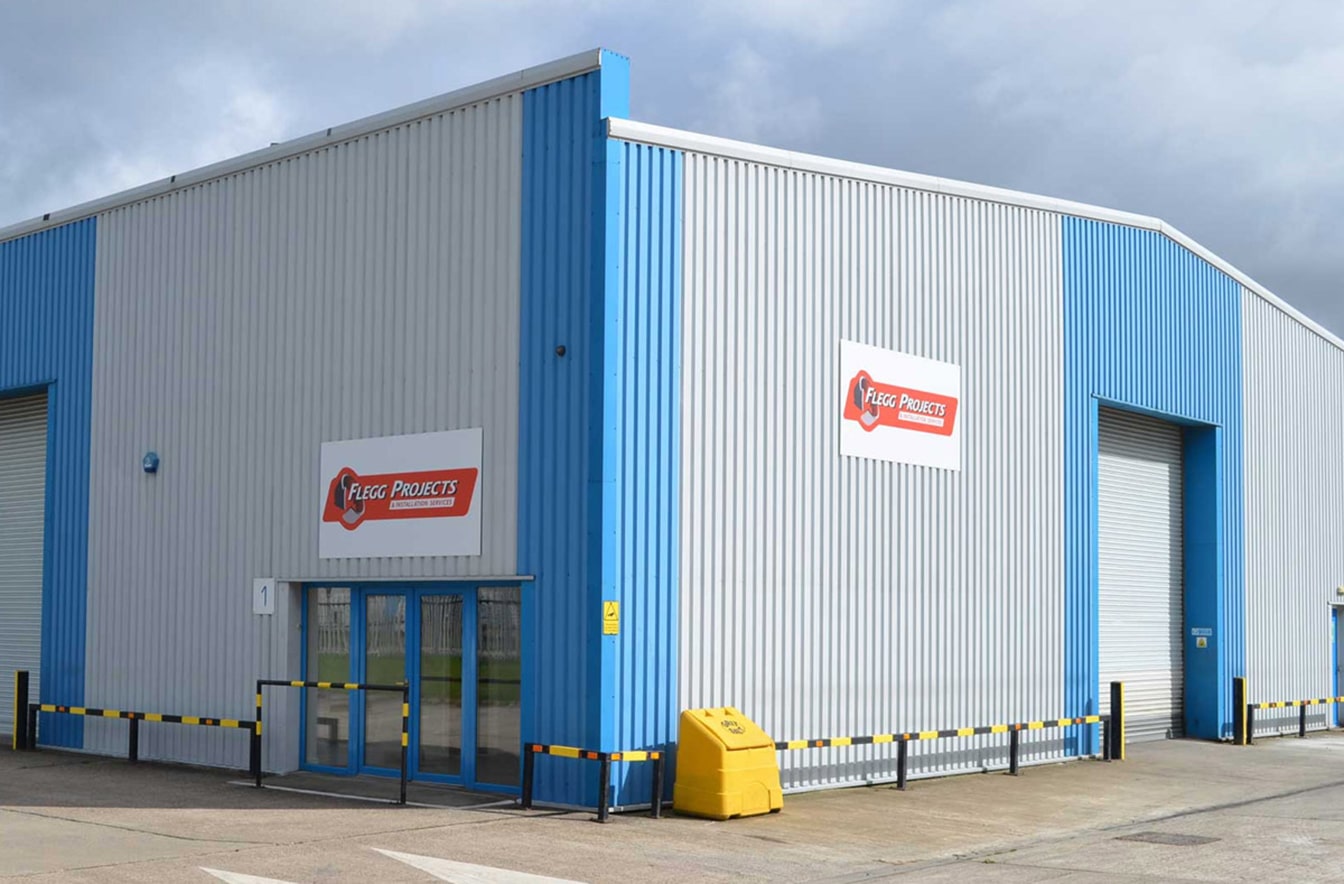
Flegg Projects have recently acquired an additional 6000 sq. ft of warehouse space to help UK businesses struggling to find room for stock, heavy machinery and fragile equipment.

According to the UK Warehousing Association (UKWA), 85% of their 750 members have received Brexit-related requests for warehouse space. About 75% were not able to take on the new business.

Our new capacity suits long or short-term storage of stock or machines in transit, and we’ll be offering flexible terms and prices.

In addition to storage services we also offer the following:

  • Container loading/offloading
  • Lifting/handling capacity of up to 125-tons
  • Export packing

So whether you’re looking for a short term home for your in-transit freight or a longer storage period for stock items; Flegg is capable of handling and securely storing your valuable assets.

We’re expecting this rare storage opportunity to be very popular, especially when customers need to trust a specialist with their heavy, awkward or fragile machines.

Contact us today to reserve your space.

How to Prepare for the Delivery of Your New Machine

If you’re expecting the delivery of your valuable new asset, you may be wondering how to prepare. It’s essential to install and commission new equipment safely, and on schedule, so we’ve put together a checklist to help you make sure that happens.

Here’s our machine mover’s guide to preparing your site for the arrival of your new machine.

Make sure your contractor has sufficient insurance

If you’ve engaged a company with proven experience to undertake the work safely, they probably have ample insurance in place. However, it’s best to check beforehand.

Your contractor must have the right type of insurance, to include possible damage to your site and machine, plus adequate cover for the value of your new asset.

Flag any known issues

It helps you and your contractor if you warn them of any known issues. For example, have any previous machine installations been delayed? Has anything been damaged? Have any past deliveries caused problems for you or your neighbours? Has there been any near misses?

When warned, your contractor can plan to reduce the risk of damaging your machine or affecting your production schedule.

Complete a risk assessment

Review the delivery route and target location. Assess things such as the following examples:

  • Floor loadings
  • Overhead obstructions
  • Pinch-points along the route
  • Electrical, chemical or fire hazards

Share your findings with your contractor.

Notify your staff and neighbours

We’ve found that it helps to warn everyone who might be affected. It helps them to prepare, which is good for your relationships, and you could get some useful feedback that allows you to avoid hidden problems.

Feedback could help you to avoid common issues such as scheduling conflicts and production downtime, and shared spaces can sometimes cause a problem. If you share an entrance and parking area, it’s best to speak with your neighbours as early as possible and again the day before.

Clear the delivery route and working area

Make sure you clear vehicles, skips, materials and products, from the delivery route, from where the delivery vehicle will need to park and wherever your contractor will need to transport your new machine.

In addition to safety for all, including your machine, obstructions cause delays that can affect production schedules.

Over to You

We all want our new machines to be delivered safely and on time, and that’s usually the case in our experience.

However, in our 40 years of moving machines, we’ve noted how important it is to plan well and prepare. We always do, but that hasn’t always been true of the site receiving a new machine.

Hopefully, the steps above will help you to make sure that your next delivery goes smoothly. Do let us know if you would like some help with it.

Flegg Medical Equipment Installation Service Announced

Flegg Projects are delighted to announce the launch of Flegg Medical, providing worldwide medical equipment installation and logistics services.

Flegg Projects already has over 40 years of experience in the transport, handling and installation of heavy yet delicate machines. We’re now pleased to welcome a new team of experienced engineers with the specialist skills required to handle medical equipment.

We’re enabling our new colleagues to provide the best possible service by investing in new fully equipped tackle vans. Support will be provided from our existing commercial vehicle fleet which is designed for safely transporting equipment such as MRI and radiation therapy systems.

Mark Marshall, Commercial Director, commented, “We’ve provided services to the healthcare industry in the past, and it’s a market that we were keen to expand into. Over the past 18-months, our business has invested time and cash into our quality systems and recently achieved safe contractor accreditation. This has enabled us to offer our services directly to the original equipment manufacturers. We already have most of the vehicles and equipment required in our existing fleet so combining our infrastructure with the knowledge and experience of our new team will mean a high-level service is available.”

The new Flegg Medical division is proud to be serving a leading producer of medical equipment, and the hospitals and clinicians using their technology to save and prolong lives.

Better health and safety for your machinery move – less bureaucracy

Did you know that there’s a way to vet contractors for health and safety standards without anyone having to complete or process paperwork?

The work of appointing contractors for projects or services can be taxing enough without having to dig into their safety record and policies. Few of us would choose to be familiar with the Health and Safety (Offences) Act (2009) and the Corporate Manslaughter Act (2008), but we all know why we need to conduct our business safely and responsibly. As much as we would prefer to do business without the time and cost of due diligence, we like accidents, audit failures and reputation damage even less.

Imagine then that your tender process doesn’t involve hours of health and safety vetting, but still assures you that the contractors you choose have a high standard of health and safety practice. That’s the low-effort, high-confidence experience offered by a third-party accreditation scheme.

Safer and Simpler

Safe working practices have always had a high profile at Flegg Projects, and we recently went through the process of evaluating and joining such a scheme. It’s good for us because it reassures those who don’t already know of our commitment to health and safety, and it benefits our customers by reducing the time and expense of their tender processes.

After reviewing several providers, we chose Alcumus SafeContractor because they’re closely aligned with the HSE and aren’t sector-specific, which means that you can use the same scheme even when projects need a variety of disciplines.

Thousands of organisations in the UK are members, including Linklaters LLP, Greggs, and many other SMEs and FTSE 100 companies.

We have our Mick Alvey to thank for managing the SafeContractor process for Flegg Projects. We achieved the accreditation at the end of May, and Mick gave only positive feedback about working with Alcumus:

“I found application process straightforward and the online interface easy to understand and interact with. Alcumus staff were always on hand and more than willing to help with any of queries I had. I would be more than happy to recommend Alcumus to anyone looking for SC accreditation.”

We’re also very grateful to Mick and the other members of the back-office team for their support and attention in achieving our accreditation. As a SafeContractor member, we’ve demonstrated our commitment to health and safety and further reduced costs and timescales for our customers.

You can sign-up to the SafeContractor scheme here so that you can vet the credentials of potential contractors and ensure that you’re only working with those who’ve met the standard.

The Flegg Originals

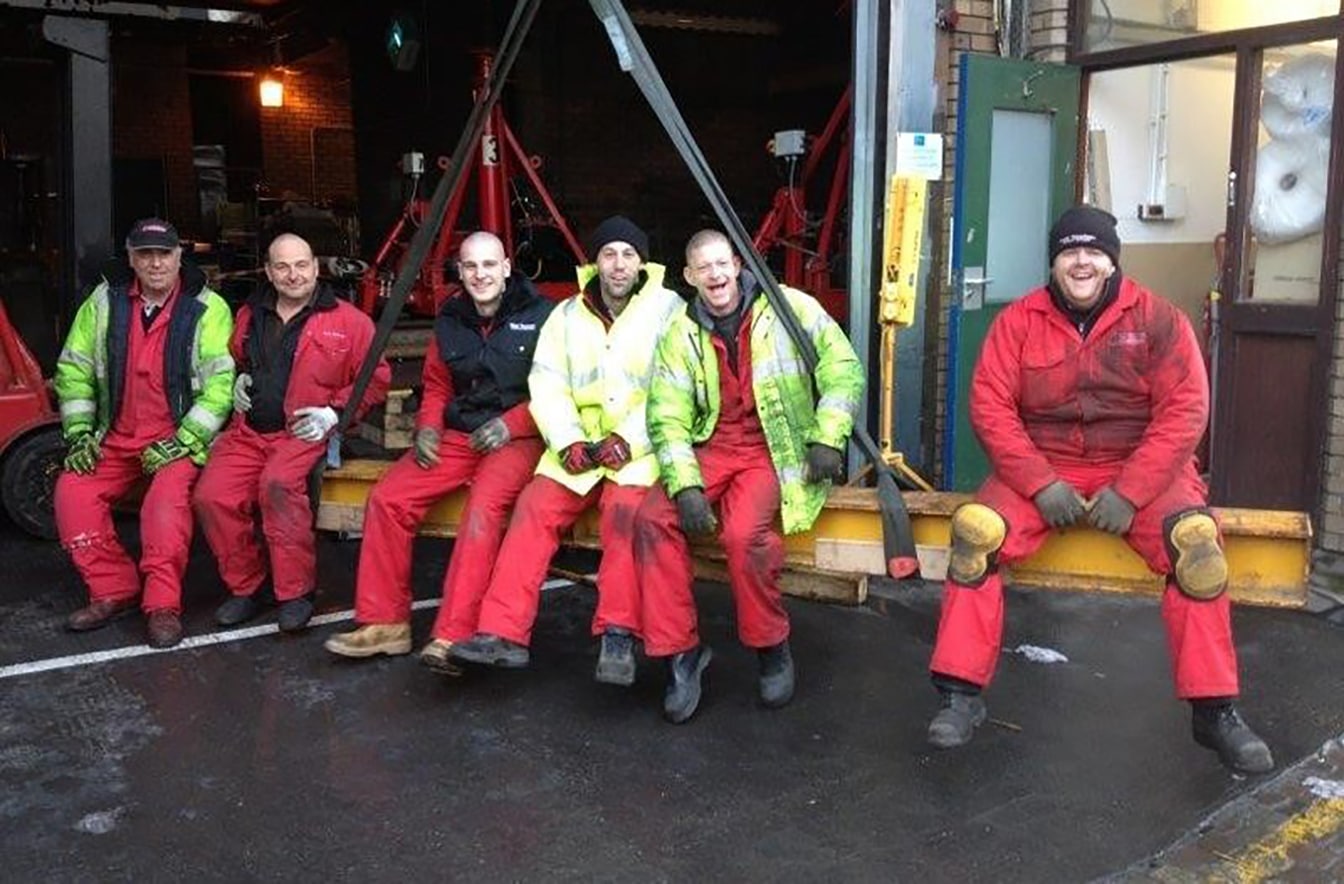
(Left to right) John Petch, Dave Lovett, Jason Temple, Shaun Hogg, Kevin Rymer and Adam Ambrose.

Although we are in the business of moving machines, our business would not be anything without its dedicated team of staff.

Our ethos now and has always been about building long-term relationships with clients and partners. This is even more true with our hard-working and dedicated installation crews.

At Flegg we take great pride in the service that we provide. We have grown exponentially over the years but it’s important that we retain the ethics which have made us successful. We have a core team that have been with us through thick and thin who help to maintain our exacting standards.

With over 120 years of combined service, the business simply wouldn’t be where it is today without their hard work, commitment and dedication.

We believe in growing our own talent and promoting from within. Many of our team have joined Flegg with no previous experience but a whole bunch of enthusiasm to learn and progress.

This includes Adam Ambrose (Operations Director) & Jason Temple (Transport and Warehouse Manager) both who joined us as drivers.

John Petch was our first ever employee and over 25 years later he remains an important member of the team and a great ambassador for the business. Dave, Kevin and Shaun fulfil senior positions within our transport division; managing intricate and challenging installations and removals every day.

Flegg originals… we salute you!

ITSSAR Forklift and ALLMI Slinger / Signaller Training

At Flegg Projects we are always keen to maintain our high-levels of Service and Quality.

Over the past 12-months, the business has gone through an intensive period of recruitment with staffing numbers increasing by over 20%.

Within various industries, it is imperative that staff are offered continuous Training and Development and in 2018 this is an area that we at Flegg Projects are looking to improve.

We are therefore pleased to announce that we have created a new position within the business, Gary Stafford joins Flegg as Training Manager. His role will involve keeping our staff at our Aston Clinton and Washington depots fully certified to enable them to fulfil their daily duties.

Gary is a very knowledgeable Instructor/Examiner with over 30-years’ experience within various Industries using different types of Mechanical Handling Equipment, he enjoys helping people to gain the Skills and Qualifications to fulfil their potential within their roles, he is also committed to promoting Safety within the workplace with ongoing Training and Assessment.

Over the coming weeks, Flegg will be going through the process of being able to offer Accredited ALLMI Lorry Loader/Slinger Signaler Training, both to Novice and Experienced Operators. We will also be offering ITSSAR Accredited Fork Lift Training to Novice and Experienced Operators, training can be delivered at the customer’s premises or at our Aston Clinton Training Centre.

We will also be looking at offering Driver CPC as an option.

For more information about the courses on offer please email the training department direct.

Machinery Installation Without Downtime

Keeping abreast of the latest technologies and development is as vital in the packaging sector as it is in any sector. So when a leading packaging manufacturer across over 30 countries identified a specialised packaging production machine, it was to become the “first of its kind” in the UK.

With such a heavy investment, there were inevitable concerns about the installation process, which would require hundreds of separate lifts with some in excess of 22,000 kgs. There were also natural concerns over the ability of the working factory to maintain its high production levels.

Two key decisions, or imperatives, were taken that would have a great impact on the project’s outcome – the first was to commission Flegg Projects to undertake the installation, and the second to keep the plant fully functioning at all times.

Like in any business, any downtime in production would affect the bottom line. A challenge indeed but for Flegg Projects, with their experience of relocating and installing heavy machinery, the project was ‘business as usual’ in some respects. Every project is, of course, different and Flegg treats them as unique but common to all installation projects is the need for informed planning, superb project management, clear communications and adequate resource. This installation was a complex undertaking, as the factory had to remain fully operational, and it involved several onsite contractors, across a range of disciplines.

The project was successfully delivered in phases over a duration of six months. Constant communication was needed between Flegg’s project management team and the client’s in-house team to ensure that working patterns and key timeline targets set out in the plan were achieved.

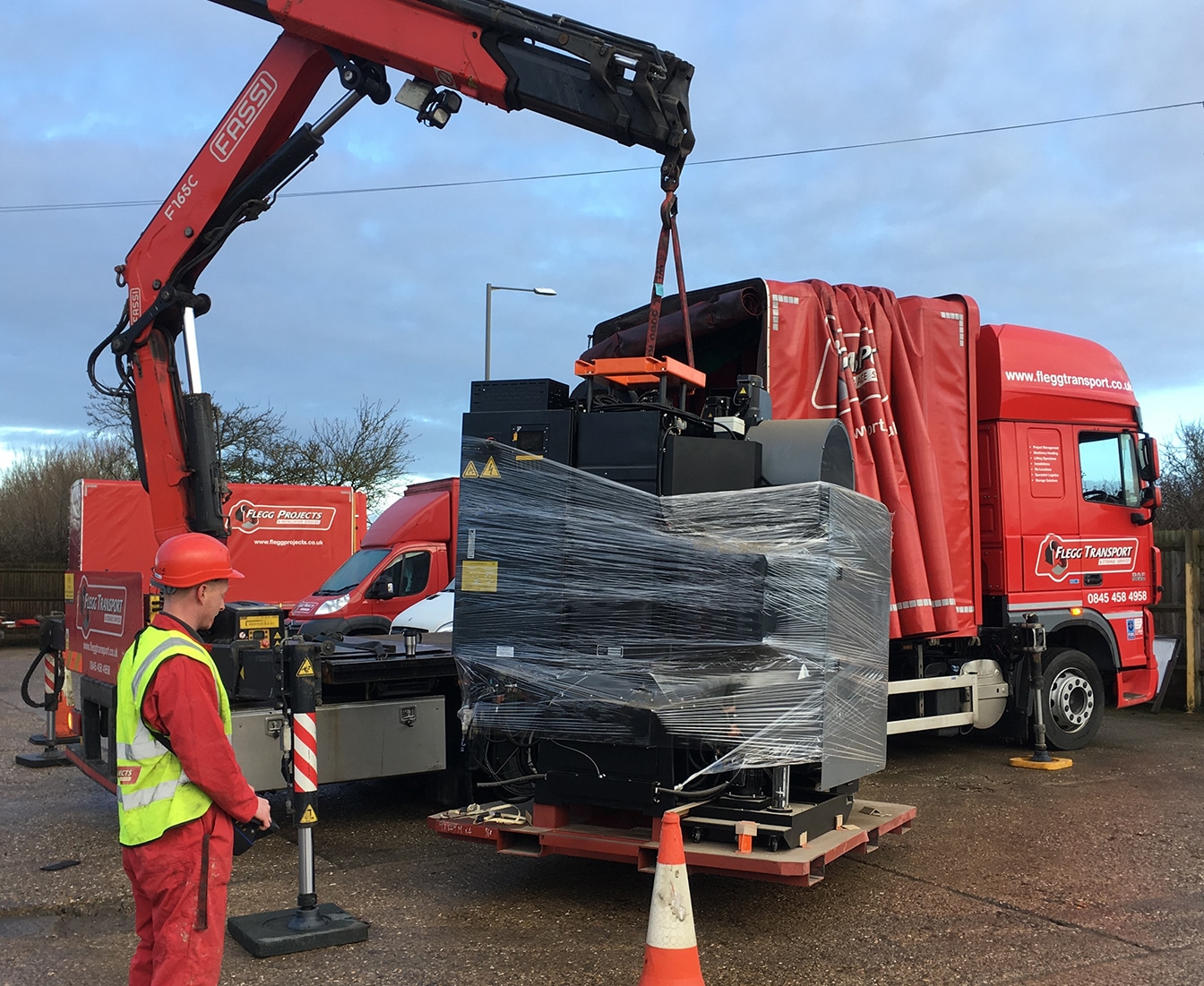
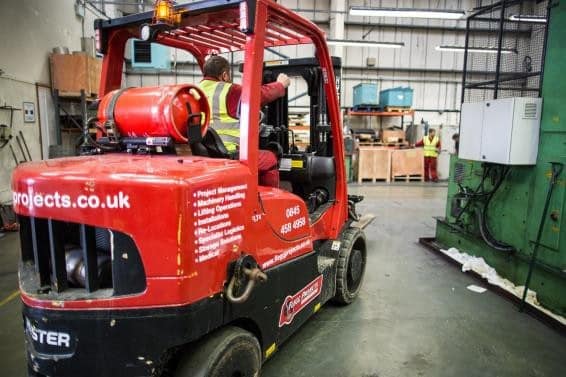
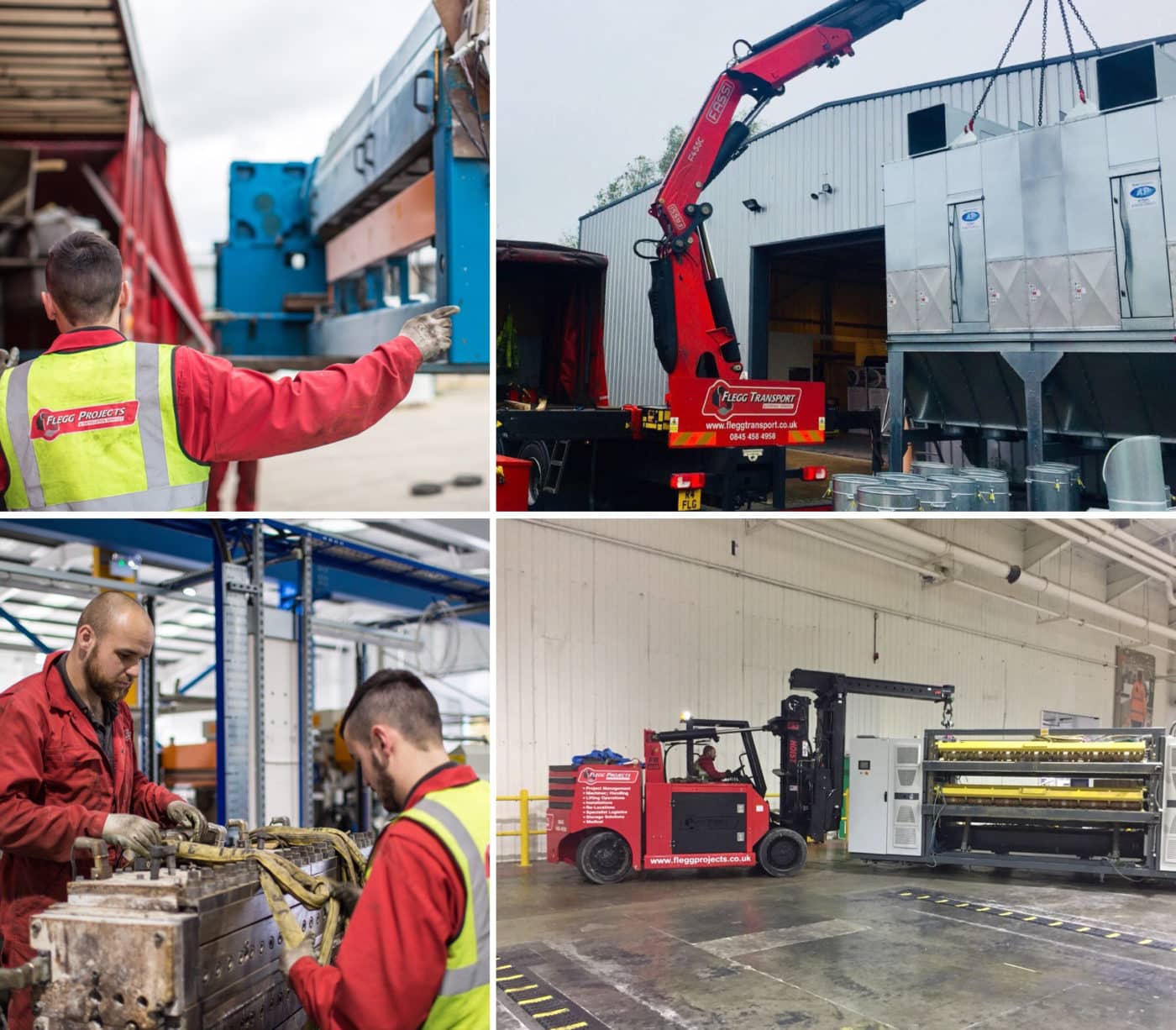
Flegg Projects used their expertise and knowledge to offload and unpack equipment from third-party vehicles and provide engineering support to the machine supplier to assist with the mechanical assembly. The selection of moving and lifting equipment required included versalifts, vehicle-mounted cranes, counterbalance forklifts and MEWPS – all provided from their own well-maintained fleet. Having invested heavily over the past few years in all of the equipment they use regularly, Flegg Projects are sure that it’s in top condition and fully operational at all times. With critical timings, projects such as this packaging installation cannot be let down by equipment.

The result – a safe installation and factory productivity levels were maintained. The client was delighted with Flegg Projects’ performance and with their new machine, which has been contributing to their business, churning out product 24/7.

Want to know more about Flegg Projects or you have a factory relocation or removal need? Contact our experienced team who will be happy to help.

View article in the Food & Drink Processing & Packaging digital online magazine.